Words That Don’t Just Sell — They Stick
Picture this: Your email lands in a crowded inbox. It’s one swipe away from oblivion—or one word away from a click.
The difference? Language rooted in psychology.
In this post, we’re diving deep into the best-performing words and phrases in email marketing—grounded in behavioral science and battle-tested by high-converting brands. From subject lines to CTAs, we’ll decode how to speak to the brain and the heart.
1. Why Psychology Makes or Breaks Your Emails
Most marketing emails are beautifully designed… and completely ignored.
The problem isn’t your offer. It’s your word choice.
Great email copy triggers:
- Attention (the cocktail party effect)
- Emotion (we buy with feeling, justify with logic)
- Urgency (FOMO, loss aversion, scarcity)
- Trust (credibility cues and social proof)
In short: every word is a psychological switch.
Let’s look at the best ones to flip.
2. The 9 Words That Light Up the Brain
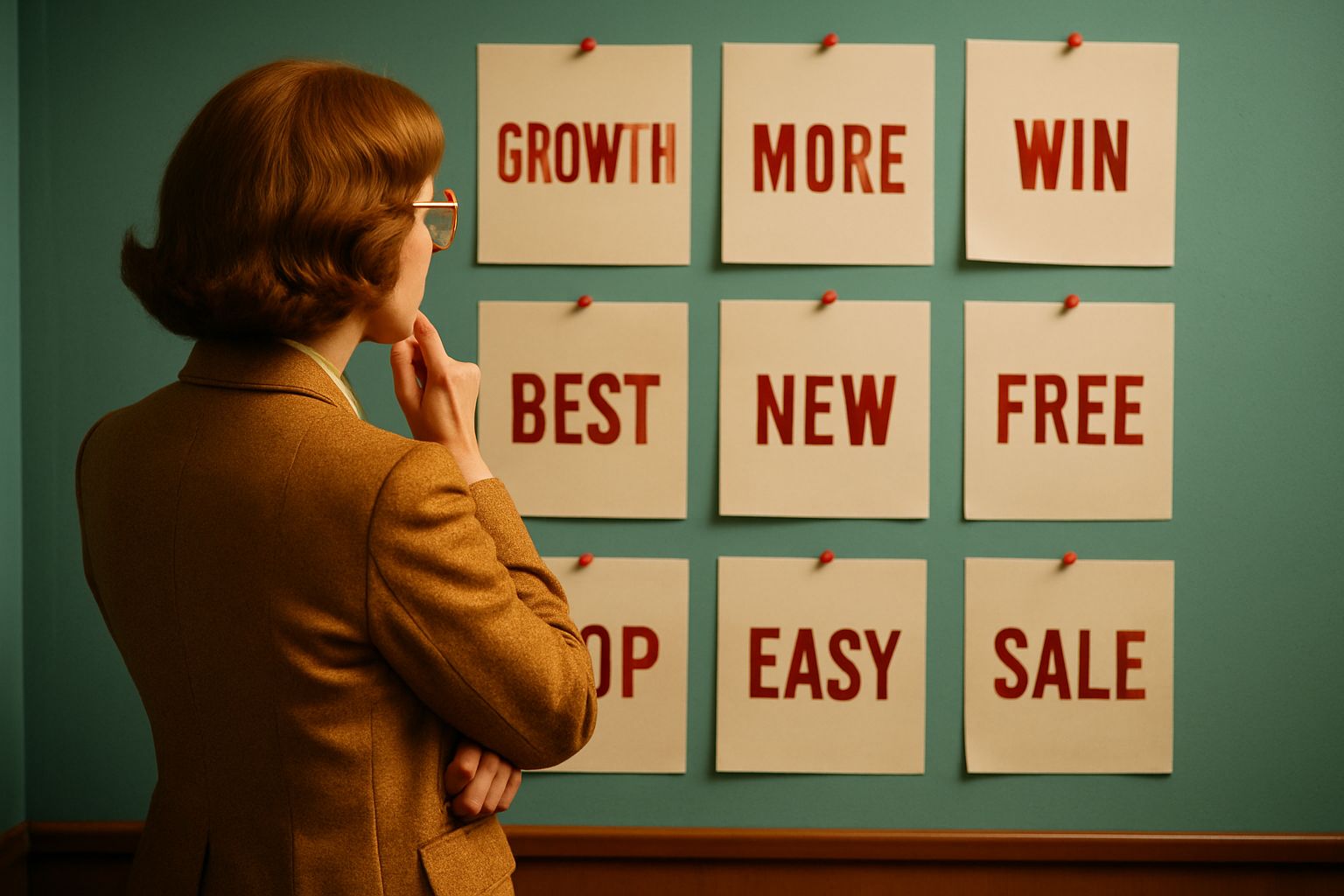
These words consistently rank highest for opens and clicks:
🧠 Psychology-Powered All-Stars
- You – Feels personal and direct. The most persuasive word in English.
- Free – Still the top-performing word, but use carefully to avoid spam filters.
- Now – Activates the brain’s need for immediacy.
- Because – People crave logic. Giving a reason = higher compliance.
- New – We’re wired to seek novelty. Instant dopamine hit.
- Easy – Reduces perceived effort. Triggers cognitive fluency.
- Proven – Builds credibility. Signals social validation.
- Save – Speaks to both time and money.
- Limited – Leverages scarcity, one of Cialdini’s 6 persuasion principles.
Subject Line Example:
“💡 Save hours on content planning (free template inside)”
3. Power Verbs: Make Every Sentence Work for You
Verbs drive action. Strong ones ignite emotion.
⚡️ Use These Power Verbs in Your Copy:
- Discover
- Unlock
- Boost
- Fix
- Eliminate
- Try
- Grab
- Build
- Score
Before and After:
Weak: “Learn about our new feature.”
Strong: “Unlock faster workflows with one new click.”
4. Loss Aversion: Show What They’ll Miss
According to behavioral economics, people are more motivated by avoiding loss than gaining something new. It’s called loss aversion.
That’s why framing matters.
Try This Instead of Generic Copy:
- Instead of: “Get the full version”
- Say: “Don’t miss out on these premium tools”
More High-Impact Phrases:
- “Before it disappears”
- “Avoid falling behind”
- “Last chance to simplify your day”
5. Emotional Adjectives That Sell (Without the Sleaze)
Used well, adjectives elevate copy. They add urgency, appeal, and delight.
🔥 High-Conversion Adjectives:
- Effortless
- Unexpected
- Frustration-free
- Frictionless
- Magnetic
- Surprising
- Fast
- Smart
Example: “Try this frictionless email builder (and never wrestle with design again).”
6. CTA Microcopy That Gets the Click
The words on your button? They matter more than the color.
✨ High-Performing CTA Variations:
- “Yes, I want this”
- “Send it to me”
- “Take the tour”
- “Try it (no signup needed)”
- “Let’s go →”
Why it works:
First-person phrasing increases conversion by making the reader feel in control.
7. Email Copy for B2B? Skip the Jargon.
“Scalable solution leveraging synergies” might sound smart, but it’s noise.
🧼 Clean Language Swaps:
| Instead of… |
Say… |
| “Leverage scalable insights” |
“Use what works, again and again” |
| “Enterprise-ready dashboards” |
“Built for fast-moving teams” |
| “Optimize internal processes” |
“Save time where it matters” |
Example:
“Simplify your team’s day in 3 clicks. No IT required.”
8. Preview Text: The Most Underused Real Estate
Your subject line is the headline. Your preview text is the trailer.
Use it to:
- Expand the story
- Tease the benefit
- Spark emotion or curiosity
Bad:
“Here’s what you need to know about this week’s update…”
Better:
“What do Netflix, Notion, and your next email campaign have in common?”
9. Testing, Timing, and Subject Line Psychology
Best Times to Send:
- Tuesday–Thursday mornings perform best for B2B
- Late-night sends (10pm–12am) can feel more personal
Test These Variables:
- One-word subject lines (e.g., “Wait…” or “Real talk”)
- Emoji vs no emoji
- Curiosity-based subject lines vs direct benefit
10. Mini Swipe File: Copy-Paste Subject Lines
- “Free template: Plan your content in 15 minutes”
- “Don’t make this email mistake (we did)”
- “3 smart words to boost your click rate”
- “You’ve never written an email like this”
- “The simplest fix to your open rate problem”
Final Thoughts: Good Copy Feels Like a Favor
When your email makes someone smile, think, or breathe easier—that’s marketing done right. Use psychology not to manipulate, but to connect.
Start with empathy. Sharpen your verbs. Speak like a human, and your words will go far.
And hey—if all else fails?
Try saying “you” more. It works every time.
Sources
Copyhackers – Email Copywriting Tips
https://copyhackers.com/email-copywriting/
Behavioral Science Principles in Marketing – CXL
https://cxl.com/blog/behavioral-science-marketing/
Nielsen Norman Group – Writing for Web and Email
https://www.nngroup.com/articles/email-copywriting/
Campaign Monitor – Email Subject Line Report
https://www.campaignmonitor.com/resources/guides/email-subject-line-guide/
VeryGoodCopy – Psychology in Copywriting
https://www.verygoodcopy.com/